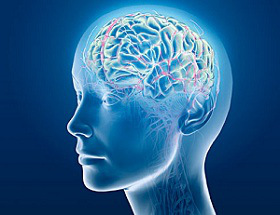
How Therapy Affects Your Brain
Quick answer: Therapy changes your brain through neuroplasticity—the brain's ability to reshape its structure and function throughout life. From a neuroscientific perspective, psychotherapy is a laboratory for developing, reshaping, and strengthening neural connections that promote psychological flexibility and life satisfaction.
What does therapy actually do? How does it work? Does anyone really ever change? Neuroscience has exploded in recent years, revealing how the human brain develops, operates, and changes—and the findings offer a compelling answer: yes, people change, and therapy is one of the most direct ways to do it.
What is neuroplasticity?
Neuroplasticity is the finding that the brain is not a rigid organ but a malleable one, changing throughout life in both structure and function—through experience.
We actively change our brains by the way we respond to our environment. The brain and nervous system are made up of millions of neurons capable of connecting in a multitude of combinations. The architecture of your brain is the tangible expression of your life history—the culmination of a lifetime of learning. Sometimes that lifetime of learning produces a complex, integrated neural network that results in psychological rigidity, like depression or anxiety.
How does therapy change the brain?
Therapy is essentially a laboratory for developing, reshaping, and strengthening new neural connections that promote psychological flexibility and life satisfaction.
Restructuring neural networks involves a certain amount of stress—think of working out at a gym. To build muscle, you apply resistance. To learn math, you wrestle with problems until you "get it." Therapy is the same. It's not supposed to be easy; if it is, not enough stress is being applied to the neural "muscle," and psychological growth may be less likely. It's important to know at the start of the therapeutic journey that therapy may get tough, because it will—and this is a good thing.
What conditions help the brain grow in therapy?
Neuroscientist Louis Cozolino, Ph.D., in The Neuroscience of Psychotherapy, identifies four areas in which psychotherapy enhances neural growth and integration.
They are: (1) the establishment of a safe and trusting relationship; (2) mild to moderate levels of stress; (3) activating both emotion and cognition; and (4) the co-construction of new personal narratives. Together, these conditions promote growth and integration of neural networks that lead to increased psychological flexibility and life satisfaction.
What does this look like with anxiety?
Anxiety is a rigid neural network characterized by reactivity and opposition to experience—and therapy loosens it step by step.
The therapist promotes safety and trust through mindful attunement. That empathy and receptivity creates an environment where the client can explore new flexibility in how she relates to another human being—taking risks, learning to be vulnerable without fear of rejection or abandonment. Over time, the rigidity of her neural networks is challenged through risk-taking, new perspectives toward thoughts and feelings, and new behaviors. She learns to move toward and make space for her anxiety, experiencing it less reactively, with openness and acceptance. She practices mindfulness skills that orient her to the present moment rather than despair over the past or an imagined future. She clarifies her values, develops emotional intelligence, and puts her thoughts and feelings into words. This is the work of anxiety counseling and mindfulness-based therapy.
You can change your own brain
Through this process, a client develops a sense of herself in a new context—no longer the victim of internalized threats or fear. That new context is literally manifested as a newly constructed, interconnected neural network. She built it. She changed her own brain through the process of good therapy—and so can you.
Getting started. Ready to put neuroplasticity to work? Our individual adult counseling team can help you start rewiring the patterns that hold you back.
Frequently asked questions
Can therapy really change the brain?
Yes. Through neuroplasticity, the brain changes structure and function throughout life based on experience—and therapy deliberately shapes that experience to build more flexible neural networks.
Why does therapy sometimes feel hard?
Growth requires mild to moderate stress, like resistance builds muscle at the gym. If therapy never challenges you, not enough stress is being applied for psychological growth to take hold.
How long does it take for therapy to change the brain?
It takes time, as all relationships and learning do. Rigid neural networks are reshaped gradually through repeated risk-taking, new perspectives, and practiced new behaviors.
Get started with a therapist at Austin Mindfulness Center—in person in Austin or online across Texas.
