What is Mindfulness Practice?
Quick answer: Mindfulness practice is the repeated, intentional application of present-moment awareness—formally on the meditation cushion or informally in everyday life. Research shows regular practice actually reroutes neural pathways, improving our ability to tolerate discomfort, reduce anxiety, and focus and learn more effectively.
In episode two of Mindfulness Off the Cushion, all four co-hosts sit down to define the term "practice" as it relates to mindfulness and meditation—in their own words. The discussion uncovers commonalities as well as differences, and highlights how exposing ourselves to divergent worldviews expands our own. Here's what came out of it.
What does practice mean, neurologically?
At its most literal, practice is the repetitive application of a skill or procedure until it becomes habitual—and with mindfulness, that repetition changes the brain.
Drawing on her clinical training, co-host Christina points to a large and growing body of research showing that regular mindfulness meditation actually reroutes our neural pathways. That neural rerouting can have profound effects: optimizing our ability to tolerate discomfort, reduce anxiety, and learn and focus more effectively. It's part of why mindfulness skills feature so centrally in anxiety counseling and mindfulness-based therapy.
Does mindfulness practice only happen on the mat?
No—the barrier between formal and informal practice is largely arbitrary.
For co-host Patrick, a classically trained musician, "practice" first conjures dread: "there goes my social life, there goes anything fun." That feeling comes from a narrow definition of practice as preparation for a big performance—and with that rigid view, it's easy to assume mindfulness can only happen on the mat. The conversation moves away from meditation-as-performance toward something more expansive: mindfulness as a fluid, informal, everyday sort of practice.
What are the three core components of mindfulness?
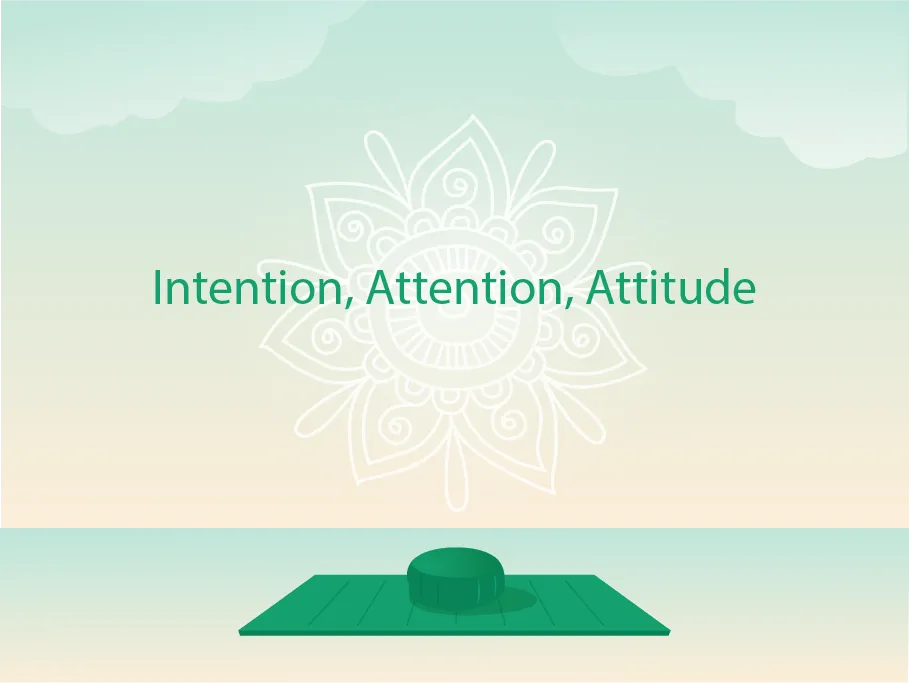
Clinical psychologist Shauna Shapiro identifies three: intention, attention, and attitude—the IAA Model of Mindfulness.
This model opens up what it means to practice off the mat. For co-host Claudio, formal meditation offers an intentional space to enact self-compassion—but the central question is bigger: how do I make my entire life an area in which these qualities of mind are also present for others?
Are mindfulness and meditation the same thing?
Not exactly—but the boundary between them is blurrier than our category-loving brains would like.
The human brain loves tucking concepts into neat little boxes, and real discomfort arises when concepts refuse to fit. When those boxy boundaries begin to blur, we can either fight it with more boundaries or accept it as gracefully as we can. (Hint: a bit of mindfulness—or meditation, whichever you'd like to call it—may help in that department.)
Why did Jon Kabat-Zinn choose the word "mindfulness"?
Because in late-1970s Boston, "meditation" could be intimidating to average people—especially in a clinical setting where it had never been used before.
Kabat-Zinn, founder of Mindfulness-Based Stress Reduction (MBSR), told a workshop Claudio attended that he chose "mindfulness" as a more palatable, approachable descriptor. Claudio sees it as marketing genius of the best kind—simple language framing the offering as something of benefit. He takes a page from that book in his own teaching, calling the practice "mindfulness meditation" and likening mindfulness to training wheels: new students approach mindfulness skills first, only to discover they've been practicing meditation all along.
Whether formal or informal, may it be of benefit
No matter the setting, the teacher, or the term, what matters most is being left with tools to use off the cushion—skills that ease the suffering we all experience in this thing called life. There's no magic behind mindfulness or meditation. Perhaps practice is simply a mode of being in the experience of life—intentionally, attentively, and repeatedly—until it becomes a healing habit. Looking for help in your daily dance with suffering? Listen to the Mindfulness Off the Cushion podcast.
Getting started. If you'd like guidance building a mindfulness practice—or applying it to anxiety, stress, or life's harder moments—our mindfulness-based therapy team can help.
Frequently asked questions
What is the IAA Model of Mindfulness?
Psychologist Shauna Shapiro's model identifies three core components of mindfulness: intention, attention, and attitude—a framework that applies both on and off the meditation mat.
Does mindfulness meditation really change the brain?
A large and growing body of research shows regular mindfulness meditation reroutes neural pathways, improving tolerance for discomfort, reducing anxiety, and supporting focus and learning.
Do I need to meditate formally to practice mindfulness?
No. Formal practice helps build the skill, but mindfulness is ultimately a fluid, everyday quality of awareness you can bring to any moment of life.
Get started with a therapist at Austin Mindfulness Center—in person in Austin or online across Texas.

